

By William Gallegos
Our Mountainous Weather Mix
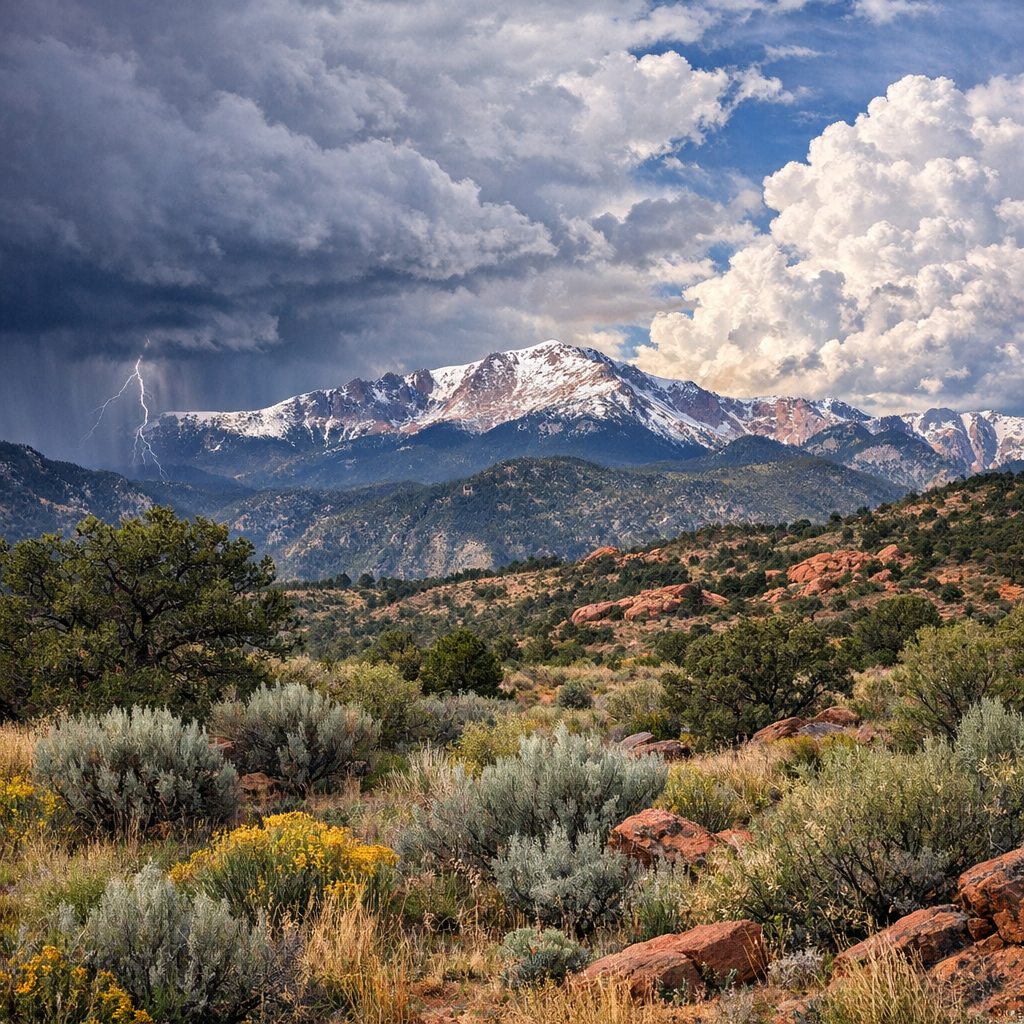
Manitou Springs enjoys four distinct seasons—each with its own character thanks to elevation, terrain, and mountain influence. Summers tend to be mild with afternoons punctuated by thunderstorms, while winters swing between sunshine, snow, wind, and bitter night‐time cold. Annual rainfall sits around 20–24 inches, and snow totals sometimes exceed 30 inches depending on how storms track and settle. Despite potential extremes, we get 250–280 sunny days a year. Some winters bring subzero nights; some summers heat up into triple digits—but these are exceptions, not the rule. (Data from local climate & hazard reports.)
Microclimates & Growing Season
If you walk across town—even just a ridge or a canyon—you’ll feel the climate shift. South‐facing slopes bake more, north sides stay shaded and cooler, and creek bottoms retain moisture longer. Our growing season runs roughly from mid‐May to late August before frost returns in earnest. Gardeners here learn fast: shade, soil depth, wind exposure, and snow cover all matter when picking plants.
Water: Springs, Aquifers & Quality
Much of Manitou’s identity is tied to its springs & mineral waters—part of the Manitou Formation, which is a karst aquifer system formed in limestone & dolomite. These springs once flowed directly; now many function as artesian discharge points. Urban development above recharge areas, seasonal variability, and occasional drought stress can all reduce spring flow or alter water quality. Keeping recharge areas intact and preventing contamination are local priorities.
At the same time, the city has issued water advisories when levels of substances like lead or fluoride rise above guidelines—especially affecting homes with older plumbing, or when naturally occurring minerals are concentrated. Although everyone is served by a municipal system with regular testing, residents are encouraged to stay informed and take precautions if needed.
Wildfire Risk & Wildland Interface
Our steep hillsides, mixed vegetation—like Gambel oak, Douglas fir, and Ponderosa pine—plus development that reaches into canyons and ridgelines, make Manitou Springs part of a Wildland‐Urban Interface. That means homes are vulnerable to wildfire, especially during periods of drought, heat, and strong wind. History shows this risk: past fires and post‐fire flooding have shaped how we plan and respond.
What you can do? Reduce fuel load near your home, use fire‐resistant plants, follow defensible space guidelines, stay alert during high‐wind events, and know evacuation routes. Local fire and forestry agencies often offer resources and assessments—take advantage of them.
What Residents Can Keep an Eye On
Here are practices that help us adapt and preserve our environment:
- Water conservation: Even with a municipal supply, conserving water—especially during dry spells—helps maintain springs and aquifers.
- Vegetation management: Pruning, removal of invasive species, keeping tree canopy healthy—all reduce fire risk and protect soil from erosion.
- Mindful landscaping: Use native, drought-tolerant plants; mulch to retain soil moisture; consider microclimates in placing gardens.
- Stay informed: Monitor local weather alerts, water quality reports, and wildfire warnings—they often come quickly and with little warning.
Life here means leaning into nature’s power and patterns. Knowing how weather, water, and fire shape our place doesn’t make the extremes less extreme—but helps us live more resiliently in the wonder of Manitou Springs.